


KEY TAKEAWAYS
- Is it serious? Usually harmless, but can cause chronic bad breath and discomfort.
- Home Care: Saltwater gargles and hygiene can help mild cases. Pain killers as needed.
- When to see us: If stones are painful, recurring, or affecting your confidence.
If you’ve ever noticed small, white or yellowish lumps at the back of your throat—or experienced persistent bad breath that doesn’t go away—you may have come across tonsil stones. While the name sounds alarming, tonsil stones are quite common and usually harmless. However, they can be uncomfortable, cause recurring sore throats, or lead to embarrassment due to odor.
Understanding what tonsil stones are and how tonsil stones are removed can help you manage the condition and decide when it’s time to see a specialist.
What Are Tonsil Stones?
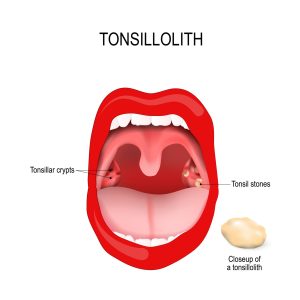
tonsilloliths lodged in the tonsillar crypt. close-up of the tonsil stones.
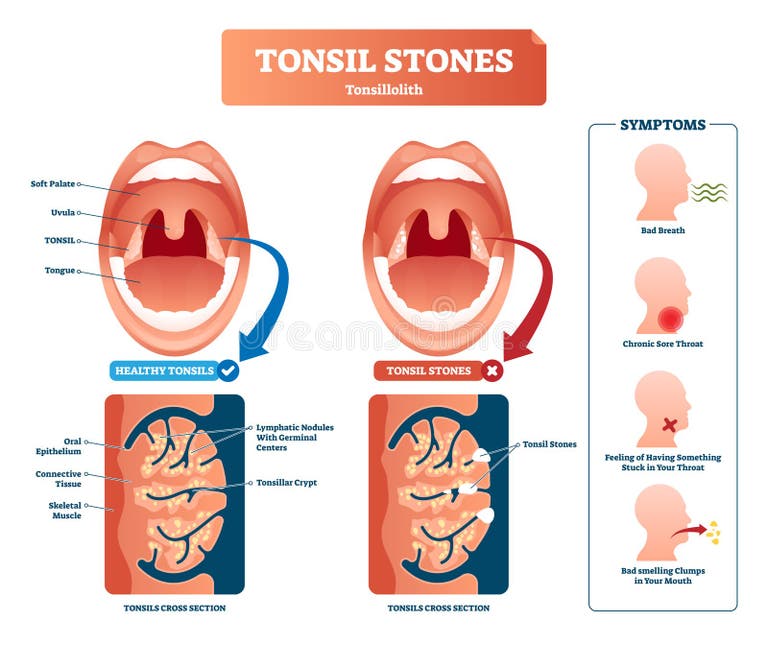
Tonsil stones (medically known as tonsilloliths) are small, hardened deposits that form in the tiny crevices of the tonsils. Your tonsils are glands at the back of the throat that help fight infection. They contain small folds or “crypts” where bacteria, food particles, and mucus can become trapped. Over time, these materials harden into stones.
While not dangerous, tonsil stones can cause unpleasant symptoms such as:
- Persistent bad breath.
- A sore throat or irritation (often referred to as tonsil stones and sore throat).
- A sensation that something is stuck in your throat.
- Occasional ear pain (because the nerves of the throat and ear are connected).
How Do You Know If You Have Tonsil Stones?
Some tonsil stones are visible—you might notice small white lumps when looking in the mirror. Others are hidden deeper within the tonsils and may only be detected by a doctor.
If you’re unsure whether your symptoms are caused by tonsil stones or another issue, it’s worth seeking advice from an ENT specialist for tonsil stones. They can examine your throat and confirm the cause.
In some cases, a sore throat could be linked to different conditions, such as chronic infections or even structural issues like a deviated septum. (Wondering how to know if you have a deviated septum? It usually presents with nasal blockage, not throat symptoms, but an ENT specialist can check for both during your consultation.)
At-Home Management Options
Mild cases of tonsil stones often don’t require medical treatment. Some people can manage their symptoms with simple home remedies, such as:
- Gargling with warm salt water.
- Using a water flosser to gently dislodge stones.
- Maintaining excellent oral hygiene to prevent bacteria build-up.
These methods may help reduce discomfort, but they don’t always prevent stones from returning.
Patient perspective
“Very helpful and informative – explained the issues and why I was experiencing symptoms. Highly recommend.”
“After years of discomfort, the procedure was quick and the relief was immediate. I wish I’d done it sooner.”

Tonsil Stones Removal: When tonsil stones are larger, painful, or recurrent, it may cause significant quality of life issues, affecting confidence in social and work settings. It may be time to consider professional treatment. You may seek tonsil stone specialist- an ENT specialist- who can safely remove them using tools designed for the delicate tonsil tissue, under local anaesthesia. This is often a quick and straightforward procedure done in the clinic. Recovery time 24-48 hours. However, often times you may ultimately need the tonsils removed under general anaesthesia. Recovery time is about 2 weeks. However this is a permanent solution to stop tonsil stones from recurring.
When do you need tonsillectomy (removal of tonsils)?
For patients who experience frequent stones or severe symptoms including bad odour, pain, low confidence, affecting work and social life and those who have tried conservative means and failed to have control.
- Tonsillectomy: If stones are chronic and causing significant problems, your ENT may suggest removing the tonsils altogether. Tonsillectomy may be offered in ENT clinic, we can provide detailed guidance on whether this surgery is necessary, what recovery involves, and whether it’s the right choice for you.
When to see an ENT Specialist?
You should consider booking an appointment with an ENT specialist for tonsil stones if you have:
- Recurring sore throats linked to tonsil stones.
- Persistent bad breath despite good oral hygiene.
- Stones that keep coming back even after removal.
- Pain, swelling, or difficulty swallowing.
Mr Umapathy at MANXENT, will discuss all options with you and help you to determine whether longer-term solutions, such as tonsillectomy, are appropriate.
Preventing Tonsil Stones
Although not always preventable, you can reduce your risk of tonsil stones by:
- Brushing and flossing regularly.
- Staying hydrated to prevent debris build-up.
- Gargling with mouthwash or salt water.
- Treating sinus infections or postnasal drip promptly, as these can contribute to stone formation.
These steps won’t guarantee you’ll never develop stones, but they can make them less frequent and easier to manage.
Tonsil stones are a common but often overlooked cause of sore throats, bad breath, and throat irritation. While home remedies may help in mild cases, recurring or painful stones often require professional care. A tonsil stone removal may need ENT specialist who can listen, examine, assess and discuss all options including surgical removal of tonsil stones and a tonsillectomy all the while keeping you at the centre of decision making.
If you’re struggling with persistent symptoms or are unsure whether tonsil stones are the cause, visiting an ENT specialist to check your tonsil stones is the next best step. With expert guidance, you’ll not only find relief but also peace of mind.

